Friday, October 21, 2016

Should public schools teach Islamic history?


Today's religion column in the Kingsport Timesnews


In the minds of most of the people I know, when it comes to Islam, it’s either a confusing or it’s an unsettling religion. Since the terrorist attacks of 9/11, Muslims have become a centerpiece of the American conversation. For example, you can’t watch a Presidential debate or the daily news without a reference being made about some Islamic-subset.

Presently, it’s impossible to ignore the Islamic world, and, the influence of Islam on the world-stage is undeniable. Islamic mathematicians shaped Algebra as we know it and major medical advances were made by Islamic scholars during the Medieval area. One of the greatest games ever, Chess, was popularized and changed forever by Islam. From its bloody origins, even up to this day, Islam has played a major role in shaping history.

Therefore, I was shocked when I heard that some people are more comfortable allowing teachers to talk in middle school classrooms about smoking pot and using condoms, than they are with our schools teaching the history of Islam. It’s hard to fathom why it’s being proposed we remove a major portion of the Islamic historical studies from the seventh grade Social Studies curriculum.

Middle school, don’t forget, is also the phase of life when we trust our kids to learn about marijuana, meth, binge-drinking, all sorts of contraceptives and intercourse in the classroom -- it’s the time when our children are led through DARE (Drug Abuse Resistance Education) and Sex Ed. I guess no one is too concerned that these two programs might stimulate impressionable minds towards..., unwanted actions?

It seems like the paranoia surrounding the Islamic middle school curriculum rests on the illogical notion that as our young adults are exposed to historical teachings about Islam, they might become overly interested in Islam and somehow wind up indoctrinated into Islam. Should we also remove the history of the Holocaust to avoid sparking potential interest in students becoming Neo-Nazis? Will our young people become racists when they learn about the march on Birmingham?

If we can’t expose our middle schoolers to the history of Islam, what’s next, do we remove this history from our high schoolers as well? At what point do we begin to trust our students with this history? Most seventh graders have smartphones with which they can access plenty of questionable materials online. I’m not sure how this type of censorship will help our young people stay current with the rest of the Country’s educational system or help them to understand one of the greatest threats to global stability?

Could this proposal end up handicapping our students?

Make no mistake about it, Islam is dangerous. But what’s even more dangerous is having a generation of uneducated young adults ill-equipped to face the 21st Century world they live in. In the 1950’s, understanding Islam better could possibly have helped reduce the blistering turmoil which the Middle East continues to endure. It’s certainly no less important today to understand Islam, considering our current milieu.

If you really want to quell the reach of Islam, stop their funding and quit buying oil from Islamic regimes. Also, we need to be more active in the spreading of the Christian faith.

The majority of American converts to Islam today are funded by our tax dollars. No, these converts aren’t being led into the Muslim faith by studying the Quran in middle school. It’s within the walls of our prison system that many people become Muslims. Sadly, Islamic chaplains are able to reach an angry and captive audience, on your dime.

Our young people need to be educated about the history of Islam if they want to take part in educated conversations surrounding one of the most talked about subgroups on the daily news. Kids need to see the differences in Islam and other world religions and they need to comprehend that Islam is concerned with only one goal, world domination. But, shielding our youth from the history of this movement only keeps them ignorant -- unenlightened minds are powerless to make educated decisions.

The Bible never endorses ignoring evil, or false teachers, which I think describes Islam well. Instead, the Bible has instructions to confront these difficulties head on, such as, “We destroy arguments and every lofty opinion raised against the knowledge of God, and take every thought captive to obey Christ...” (2 Corinthians 10:5 ESV)

Our young people need to begin as soon as possible learning about the Muslim culture and its heritage if they are to understand how deal with the threat it poses. It’s senseless for young adults to enter high school not knowing what Ramadan is, or to remain ignorant to why Islam is divided between Sunni and Shiites. How do you keep the integrity of a middle school history curriculum and neglect the Crusades or the Ottoman Empire?

In the end, to remove the study of Islam risks disabling the framework for understanding the dividing line between the East and the West, and therefore our young people won’t be able to process world events as well. I get it, people are frightened by Islam. Still, yet another way for me to put this: If you are led by fear, you aren’t being led by faith.

Friday, October 14, 2016

Since when was America a Theocracy?


Dear Christian Americans, please stop looking to the government to fix the world we live in. That stance is unbiblical and unfounded.  Dear American Secularists, please quit pretending you don't worship politicians, either.  

There are too many people already confused over the actual meaning of the separation of Church & State, so I guess I shouldn't be so surprised by how many people see the Presidency as a Messiahship position.  And, in our infatuation with the political superpowers, we all have turned a blind-eye the embarrassing & illegal shenanigans these snake-oil salespeople engage in.

When I say America is a Theocracy, that's not to say we as a nation submit to a/any God, or that we we are ruled by a Deity.  Instead, I'm saying politics is now our national religion.  We are looking for salvation from our government.  We think that the next president will either usher in the Promised Land or Armageddon, depending on if our chosen one is elected or exiled...

As a nation, we've placed too must trust and too much hope and too much faith in our politics, we are in an unhealthy state of mind.  Christians are especially guilty of this, much to our shame.  The mental gymnastics that believers take to justify the actions any politician, simply leaves me flabbergasted.

Christians seemingly haven't read their Bibles or their history books when it comes to politics.  Rome wasn't built in a day, and it wasn't build by the efforts of Christian voters.  Rome was very hostile and very accommodating all at once.  There's a paradox in how the Church spread under the oppression of an Empire that allowed conquered native peoples to worship how they wanted as long as their faith didn't interfere with Rome's agenda.

The Apostle Paul instructs the church in Rome to submit to the Government in Romans chapter 13:1 f.f., and claims God instilled these rulers.  This was while Nero ruled, the same Nero who castrated the young man Sporus, married Sporus, and consummated his marriage in public.  Paul was silent on the debauchery that Rome was infected with, and again, he commends his audience to respect the power of that government.  How could this be?

Because Paul knew his true citizenship wasn't that of a Roman citizen, a right and privilege he claimed, but it was not a point of personal identity for him.  "But our citizenship is in heaven, and from it we await a Savior, the Lord Jesus Christ" (Philippians 3:20 ESV)


Tuesday, September 27, 2016

The problem for celebrity protesters


One of the major reasons celebrities represent any protest poorly is because they live lives far removed from the issues they raise.  It's honestly hard to take their claims seriously, or to believe that they can empathize with the common person's plight.  How much could they care about groups and issues they aren't close to, or the people they rarely, if ever, spend time with?

Also, once a celebrity "takes a stand" the focus ends up more on the celebrity than just about anything else, it rarely stays trained on the issue. People forget about the problem when the spotlight stays focused on the personalty.  It's almost counterproductive for celebrities to protest much, because so much attention is showered on them, all the buzz seemingly revolves around them from that point forward.  

Finally, it's hard to point to any actions which celebrities have taken, to observe their actual front-line involvement, to see where they've gone out and invested time & energy to make a difference.  I'm not suggesting they should tap into their vast resources and use their wealth, or to even just show up on the scene, to influence any situation they say concerns them.  I'm sure when the time comes they'll step up and make a real difference for the things that truly matter to them.    

Thursday, September 22, 2016

What many Christians don't know about church


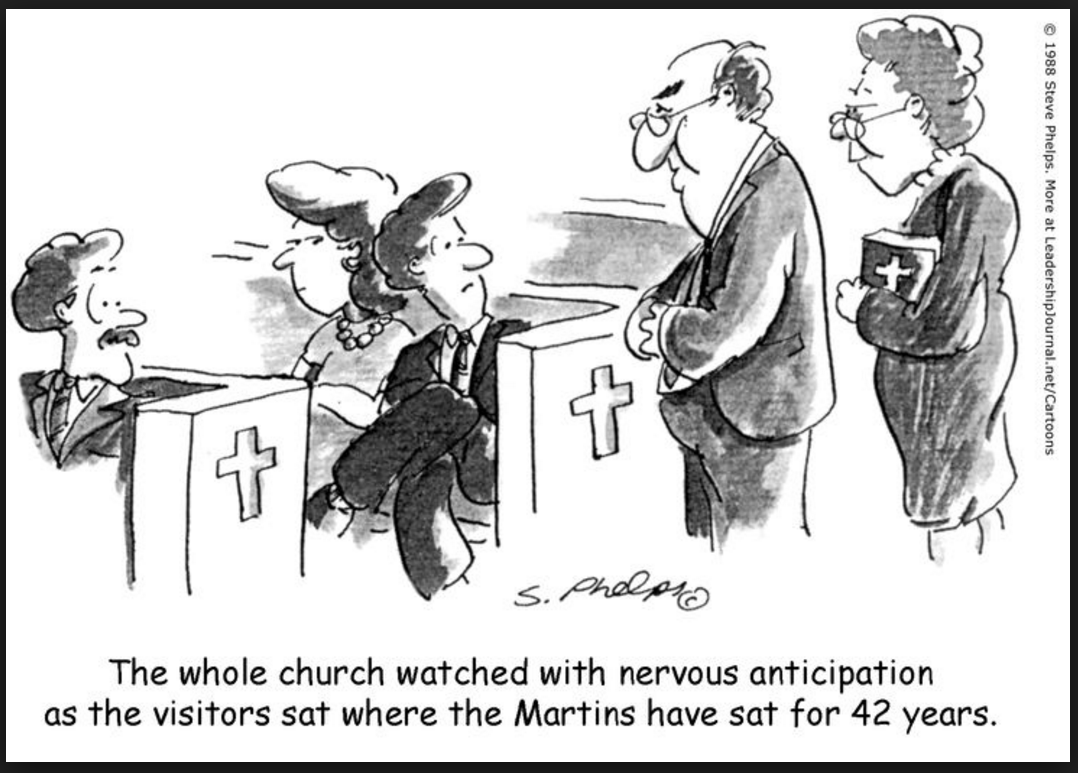
Do you know what’s one of the hardest concepts for many congregants to grasp? From the leadership to your marginalized, from the new families to those who have been with your congregation from day one -- it’s the fact that “your” church isn’t yours & it’s not about you. This is an incredibly difficult truth for most church folks to internalize.

In fact, for those who tightly control others, it’s downright frightening to think church isn’t about them. If you doubt this, just sit in someone else’s pew. Better yet, voice an unpopular perspective, or encourage people to step out in faith.

We easily get settled into the “way” we do church, we can get too comfortable with “how” we make adjustments, and eventually we forget that church is about submitting to Jesus & reaching those who have yet to meet Him. Church participation is a sacrificial act, meaning, you set aside yourself to pursue serving Jesus and you give up your preferences to better reach others. Simply put, this notion that church isn’t about you is discipleship 101.

As a christian, you don’t ever give up your personality or turn into a cookie-cutter robotic zombie. But, as believers we are called to die to self, to spread the good news, and together we pursue spiritual maturity. Sadly, many people who start out on the road to salvation take a personal detour away from the path of maturity because they are blinded by their concerns.

Maybe this is why churches plateau and decline? It could be that when we become inward focused (concentrating on our agendas and wanting our needs met) that we forget about serving our Lord and Master and we lose sight of our God-given goal of reaching people who are lost without Jesus. Where does this lead us?

When children get nervous they often chew their nails, adolescents get fidgety, and when adults get nervous, they often make bad choices. When we lose sight of the fact that church isn’t about us (sadly to the exclusion of others) we tend to lose our focus in other areas as well. Some of the fallout from this misdirection results in a heightened sense of anxiety within a congregation. At that point, many people no longer let faith guide them.

What happens when churches make choices based on our fears instead of faith? We go from making sacrificial choices (i.e., dying to self & actually reaching others) to hunkering down in survival mode. And what happens when the outlook grows bleaker and bleaker as our anxiety chokes out our ability to be optimistic? People sink deeper into their fears, and at that point stocking church restrooms with single-ply TP becomes the least of your problems.

When churches give into their anxiety, they forfeit the assurance which faith and only faith can deliver. Often times just like chewing your nails is a manifestation of being nervous, this congregational anxiety shows up in cocooning, conflict, and finger pointing. Until...

Until a church dies. Or better yet before that happens, at least one person, or hopefully a few individuals, feel called to take a stand for an authentic expression of faith, for trusting God at His word, to believe that God is in control -- not the obstacles we face.

Is it easy to shine a light on darkness? No. Satan will fight you tooth & nail, along with lazy people, mean-hearted people, and selfish people -- all who will try to stand in your way too.

Following faith as your North star instead of giving into your fears (fears are the biggest roadblock to true progress) is the big difference between people who choose to take God at His word and those who want the “rose garden” version of the “name it & claim it” false gospel of comfort & convenience. You can’t claim to be faithful if you are led by fear. When fear steers your decisions, faith takes a backseat. So, what can be done about this?

Churches need to be revitalized, frequently. But this requires trust. If you cut off the supply of freshwater to a pond, creek, or river, it stagnates it. Just like a gene pool becomes unhealthy from inbreeding, we in our churches need a greater diversity to have a healthier community. We need people to gather in the name of Christ who can disagree on non-essential ideas, but who enjoy unity on the major important Biblical truths. And just like a tree or a rosebush grows better by being pruned, sometimes churches grow better when old ideas/programs/perspectives are shed, stripped away, and removed for new growth.

A healthy congregation only thrives when it serves Jesus, reaches lost people, follows faith while suppressing fears, and encourages an exchange of ideas from a wider spectrum of views. Just like a tumor can metastasize, unchecked anxieties will grow and spread, and fear can stop the beating heart of any congregation.

“[5] And he who was seated on the throne said, “Behold, I am making all things new.” Also he said, “Write this down, for these words are trustworthy and true.” [6] And he said to me, “It is done! I am the Alpha and the Omega, the beginning and the end. To the thirsty I will give from the spring of the water of life without payment. [7] The one who conquers will have this heritage, and I will be his God and he will be my son. [8] But as for the cowardly, the faithless, the detestable, as for murderers, the sexually immoral, sorcerers, idolaters, and all liars, their portion will be in the lake that burns with fire and sulfur, which is the second death.” (Revelation 21:5-8 ESV)

Saturday, September 10, 2016

Should we forget the phrase "Never Forget"


On the morning of September 11th, 2001 I was sitting in Dr. Sennett's 600 level philosophy class.  Dr. Rae interrupted our class, and as he entered the room, he looked as if someone close to us on campus had just died horribly.  He informed us all to go quickly to chapel.  My 70 mile trip home from seminary afterwards was one of the longest rides of my life.

As we approach the 15th anniversary of the Sept 11th attacks, I simply can't see the value of perpetuating the phrase "Never Forget."  The phrase doesn't keep us vigilant, it keeps shackled to our past and to an enemy that frankly doesn't exist in the same way it did then.  Instead, we've created a new enemy.

Global terrorism and the death rates associated with terrorism has increased by 4,500 % since our response to the terrorist attacks.  We should remember, ISIS/ISL didn't even exist in 2001.

It's time to realize we are embroiled in a vitriolic battle of ideologies, not of nations.
This battle we face will not be won with military might, that's something to remember.

For a better perspective consider this.  You might be surprised that one of our greatest allies today, Great Britain, once stormed our Capitol during the War of 1812 and torched the White House.  Today, German companies dot the American landscape, and the Japaneses own a lot our debt -- last year they passed up China: http://www.bloomberg.com/news/articles/2015-04-15/japan-snaps-china-s-six-year-run-as-top-holder-of-treasuries

Am I suggesting we one day will become allies with radical Islamic jihadists?  A better question might be: What's the alternative, an extermination of them or us?  I don't how to move forward and solve this issue, but I know chanting "Never Forget" doesn't honor our fallen.  What best honors the dead is creating new life, making a brighter future, and fixing problems -- not fixating on past wounds.

Have you ever read "Bury my heart at wounded knee," and are you up to speed how we treat tribal nations on our own soil today?  What about the rift we once suffered during our own Civil War?  What about the fact that for too long during an embarrassing period of our nation's history, American women couldn't vote, nor could our minorities....  We should also be thankful the citizens of  Dresden, Berlin, and especially the people of Hiroshima & Nagasaki don't wave banners with slogans like "Never Forget."

It's not unpatriotic to say we need a better slogan, one that brings healing -- letting go of one that ties us to a painful past.  Maybe on disturbing anniversaries like 9/11 we need a new slogan, something like, "We'll always move forward"


Saturday, August 27, 2016

Is there a Brain Drain in the churches of Christ and is it being led by ministers?


I want to start this post by sharing a screen shot of Rich Little's FB status, as a way to introduce my thoughts:

(Facebook post from Rich Little) 


If you pause to consider it, ministers are called to think, a lot.  We think about sermons we are writing, future classes we are preparing, personal studies with others, how to address challenges within our congregations, what to do when counseling people, etc. So, basically we should spend much of our workweek in thought.  What happens though, when a movement or denomination discourages their ministers from thinking, or from expanding their thinking?

When I was a Bible major at Harding, F. Lagard Smith’s book “Who is my Brother?” was hot off the press. It was also a time when some within our brotherhood wrestled with questions over our identity. Particularly, are we “evangelicals,” and if not, what are we? I also remember during this period Flavil Yeakley warning our class, unless trends in attendance improved, the church of Christ could be nearly nonexistent by the year 2020.

Along this same time, over hushed cups of coffee shared in closed quarters, preaching students and Bible professors discreetly talked about our longings to be able to think freely, to rethink some of our methods of Biblical interpretation, and how to implement change in church settings while remaining faithful to our heritage. But dim clouds hovered over us, for our concerns were not merely of being ostracized, but of being dismissed and becoming unemployable.

At this same time, several established and trustworthy leaders voiced concerns in the classroom and in chapel over a potential division brewing on the horizon: Would the controversies over women’s roles cause a great schism in the churches of Christ as we entered the 21st century? Some predicted a fourth branch of the Restoration Movement was imminent.

Meanwhile, a slow but budding exodus populated by people who weren’t worried about those questions would gain momentum. As ministers and then a new generation of believers, believers who grew up going to VBS, Winterfest, Bible camp, and Lads to Leaders & LTC gradually disengaged from their congregations. Yet, no one seemed alarmed.

The tension that we face over losing some of our best and brightest minds isn’t unique to us alone. Searching articles in the Washington Post, the Huffington post, and other major news outlets will reveal many articles which highlight the slow attrition of ministers and the siphoning off of the Millennial generation from churches in general. The Pew Forum on Religion & Public life, and the Barna Group have both shared startling statistics detailing the loss of faith many young people experience as well. What I think is missing from the analysis of this trend is the disillusionment people feel when they can’t be transparent or vulnerable with the people they break bread with and when “questions” are discouraged.

Young people today aren’t looking for laser light shows, lattes, or laid-back worship services, and, our preachers aren’t interested in these “church fads” either. Attempts at being “cool” will not recruit Millennials to our pews. This generation of young people in their 20’s & 30’s seek significance from their faith and the freedom grow intellectually and experientially. If they can’t find this freedom from within our heritage, they are going to continue to look elsewhere for substance-- far from what they perceive as closed-minded or sectarian churches.

For too long, we asked question about how to keep certain people happy, how to not rock the boat, and how to make sure no one was ever offended. Are we facing consequences for worrying more about not disrupting the way things have always been done than over worrying about being led by God? Our younger generation doesn’t see the relevance of fighting old battles which were initially proposed by people long dead, and our ministers are suffering burnout over fighting for ideas they don’t personally embrace. But I do not think all is lost.

Even though the vast majority of my college classmates have abandoned full time ministry, and I’ve seen countless young people walk away from church, I’m hopeful for our future when I see the lineups at events like the Tulsa Soul Winning Workshop and at some of our Bible lectureships. As we invite in solid intellectuals who are deep thinkers, like N.T. Wright and Scot McKnight, and as we host events where passionate speakers like Francis Chan and Bob Goff can speak to our people, I see hope for our ability to integrate into their ideas into our theological framework.

A recently released movie, “Concussion,” is based on the true story of NFL players who suffered major brain damage from multiple head traumas they received playing football. The tension in the plot is over the fact NFL leaders knew about the dangers to the players, but they were afraid to reveal the truth. Could someone write a script for our circumstance, “Concession?” If we continue to discourage our preachers from stretching the comfort zone of the congregations they serve, if we do not find resolution for the stereotypical confrontations between elderships and their preachers, and if we do not find ways to help our young people transition into adulthood with their faith in tact, Flavil Yeakley’s prediction might come true for the church of Christ.


End-note:
The above picture up top is a screenshot of Rich Little's Facebook post where he shared his exit from ministry.  I met Rich in the late '90s when the word on the street was he was being groomed to replace Dr. Burkes as the next president of Harding University; Rich was a student at Trinity and he was preaching at the Naperville church of Christ at that time.  After Rich defended his PhD., instead of returning to Harding as planned, the Naperville church brokered a deal with Harding to keep Rich on staff in Naperville, and then eventually Rich left Naperville and went to Malibu Ca.   I really don't know why he choose to leave vocational ministry, I would say though that his leaving ministry illustrates the struggle I'm describing well, that of thinking-intellectuals wrestling with finding a place in some of the churches of Christ.

Presently, I myself preach in a non-denominational church, New Song, and we are heavily influenced by the Restoration Movement.  I found salvation in a loving mainline church of Christ, actually the Naperville Church of Christ.  I have no ill-will towards the churches of Christ, and if the right fit were possible & if God someday led us in that direction, I would one day gladly preach in a church of Christ again.  I'm saddened that people with such great potential have these struggles, but I'm sure this isn't unique only to them.  I'm guessing many congregations of many stripes are suffering from this brain-drain too; I'm afraid these are simply the consequences and the fruition of sectarianism.


In Search of Peace


(Kingsport Timesnews 8/26/15)

There are some people who are concerned about the advances in Artificial Intelligence, they lose sleep at night because they are fearful computers will one day take over and enslave the human race.  Who isn’t at least a little worried about terrorism these days?  What about our rocky economy, can you say that it doesn’t trouble you from time to time? Most everyone is talking about our upcoming presidential election and most people are disturbed at the possibility of whoever our next leader might be.  Some folks are saying, we are entering another Cold War with Russia.  

What about closer to home?  It’s normal for couples to argue or for families to have strife from time to time, and even churches can wrestle over changes that need to be made, but what happens when a particular conflict continues?  

It doesn’t seem like there’s any corner of our life that is completely free from difficulties and it’s safe to say, you don’t have to look too far to find situations which disturb us.  What we long for most in this life, I’d venture to say, is peace.  

I know we long for God’s presence, and we long for good health, and we want our families to be safe & healthy, and we seek security, but I believe what we are really looking for is peace.  I’m not sure we will ever have the complete absence of trouble in this life like we want.  In fact I’m pretty convinced in this life we will face trials and tribulations, but the promise is we can have peace.    

How can we find peace when the world feels like it is crumbling around us, when evil seems to be growing stronger each day, and when life holds so much misery and sorrow?  Perhaps in the midst of such pain, we might not see the peace we desire in the moment, but then again, sometimes we focus our attention in the wrong places.

If we are trying to generate our own peace, by our own efforts, or if we are seeking peace in the wrong places, we will never find satisfaction.  Unfortunately, I think we depend on the world around us to deliver the very peace it robs us of.  We mistakenly think peace comes from having a title, position, possessions, or perhaps from our own abilities.   

Jesus leaves His disciples with the promise of peace -- all the while acknowledging they will be living in the midst of chaos, “I have said these things to you, that in me you may have peace. In the world you will have tribulation. But take heart; I have overcome the world.” (John 16:33 ESV)

Perhaps peace isn’t so much the absence of strife, but maybe peace has something to do with the assurance that all is well despite the circumstances that surround us.  Our problems and difficulties are at best temporary, they can’t last.  They don’t seem like they will ever go away, but just like a child who thinks Christmas will never arrive, time passes and our situation will change too.

I’ve seen plenty of people who felt like they were on the brink of disaster, and, I’ve been through my share of painful situations, and while all of us have struggled to see a brighter future, we survived even when we were less than optimistic.  Not everyone saw the results they wanted or experienced the improvements they hoped for, but along the way we’ve all learned valuable lessons through the pain, grew stronger as a result, and found peace in knowing God never abandons those whom He loves.  

So, no, we aren’t exempt from conflict, distressing situations, or agitating circumstances in this life.  But we are promised peace, by Him Who has overcome the world.  And in this divine promise, there is an eternal reason to hope.  May you find the peace which far exceeds all of our understanding or comprehension, and may you rest easily and securely in Jesus and His powerful presence.